
CSSS SSB Interview – Complete Guide to the Computerized Stage-1 Selection System
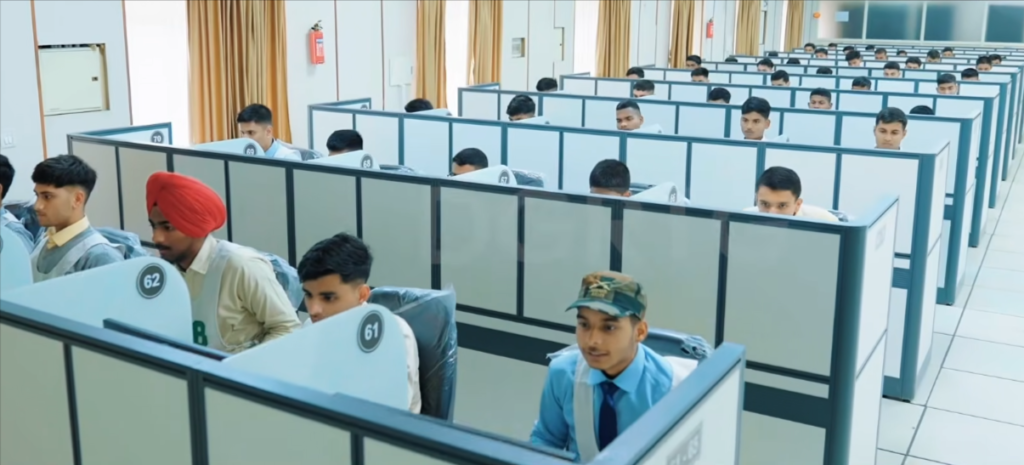
The CSSS SSB Interview is redefining the way candidates are screened in the SSB Interview Stage 1 process. As the number of defence aspirants in India continues to rise, the need for a faster, fairer, and more scientific selection system has led to the introduction of the CSSS SSB Interview (Computerized Stage-1 Selection System).
In today’s competitive Interview India environment, understanding the CSSS SSB Interview is no longer optional—it is essential for every serious aspirant aiming to clear Stage 1.
What is CSSS SSB Interview?
The CSSS SSB Interview is a computer-based screening system used in Stage 1 of the SSB process. It evaluates candidates using a mix of cognitive and personality-based questions, ensuring a comprehensive assessment of mental ability and behavioral traits.
Unlike traditional screening methods, the CSSS SSB Interview:
- Uses a standardized digital platform
- Minimizes human bias
- Provides quick and accurate evaluation
- Tests real-time thinking ability
The CSSS SSB Interview plays a critical role in filtering candidates before they move to the next stages of the SSB process.
Question Pattern in CSSS SSB Interview
The CSSS SSB Interview consists of approximately:
👉 190 Questions in Total
- 70 Cognitive Questions
- 120 Personality-Based Questions
This structure ensures that the CSSS SSB Interview evaluates both intelligence and personality, which are essential qualities for an officer in the Indian Armed Forces.
Test Format and Timing
A key feature of the CSSS SSB Interview is its time-bound structure.
Each section:
- Has a different number of questions
- Comes with a strict time limit
- Requires quick and accurate responses
In the CSSS SSB Interview, candidates must demonstrate: Speed Accuracy Consistency
This makes the CSSS SSB Interview not just a test of knowledge, but a test of performance under pressure.
Key Areas Tested in CSSS SSB Interview
The CSSS SSB Interview evaluates a wide range of abilities that are crucial for defence aspirants.
1. Map Memory - CSSS SSB Interview
In the CSSS SSB Interview, candidates are shown a map for a limited time and are later asked questions based on it.
This tests:
- Observation power
- Memory retention
- Attention to detail
2. Working Memory (Mental Processing Ability) - CSSS SSB Interview
The CSSS SSB Interview evaluates how efficiently a candidate can:
- Store information temporarily
- Process multiple inputs simultaneously
This is critical for decision-making in real-life situations.
3. Selective Attention (Focus Control) - CSSS SSB Interview
This section of the CSSS SSB Interview checks:
Ability to concentrate
Filtering irrelevant information
Maintaining focus under distractions
4. Auditory Discrimination (Listening Accuracy) - CSSS SSB Interview
The CSSS SSB Interview tests how well a candidate can:
- Differentiate between sounds
- Interpret auditory signals
This skill is essential in operational environments.
5. Space Perception (Spatial Awareness) - CSSS SSB Interview
Candidates in the CSSS SSB Interview are assessed on:
- Direction sense
- Understanding spatial relationships
- Positioning ability
6. Visualization (Mental Imaging) - CSSS SSB Interview
The CSSS SSB Interview evaluates:
- Ability to imagine objects
- Rotation and transformation of shapes
7. Form Perception (Pattern Recognition) - CSSS SSB Interview
This section tests:
- Identifying shapes and patterns
- Detecting minor differences
- Attention to detail
8. Perceptual Speed (Quick Visual Processing) - CSSS SSB Interview
The CSSS SSB Interview measures:
- Speed of recognizing patterns
- Comparing visual elements quickly
9. Linguistic Abilities (Language Skills) - CSSS SSB Interview
Candidates are evaluated on:
- Vocabulary
- Sentence comprehension
- Language clarity
The CSSS SSB Interview ensures that communication skills are also assessed, which are crucial for leadership roles.
Role of CSSS SSB Interview in Interview India
In the Interview India ecosystem, the CSSS SSB Interview plays a transformative role.
It helps:
- Handle large-scale candidate screening
- Ensure uniform evaluation standards
- Identify candidates with Officer Like Qualities (OLQs)
The CSSS SSB Interview aligns with India’s need for a modern, transparent, and efficient selection process.
Advanced Preparation Strategy for CSSS SSB Interview
To excel in the CSSS SSB Interview, aspirants must adopt a structured preparation strategy.
1. Cognitive Skill Development
- Practice memory-based exercises
- Solve reasoning questions daily
2. Speed Training
- Attempt timed mock tests
- Focus on reducing response time
3. Observation Enhancement
- Practice map-based questions
- Improve visual recall ability
4. Personality Consistency
- Answer honestly
- Avoid contradictions
5. Real-Time Simulation
- Practice under exam conditions
- Build pressure-handling ability
Common Mistakes in CSSS SSB Interview
Candidates often fail the CSSS SSB Interview due to:
❌ Poor time management
❌ Lack of awareness about test pattern
❌ Overthinking simple questions
❌ Inconsistent personality responses
Avoiding these mistakes is key to success in the CSSS SSB Interview.
Conclusion – Mastering CSSS SSB Interview
The CSSS SSB Interview is a crucial gateway in the journey of every defence aspirant. It is not just a test of knowledge but a test of mental agility, personality, and decision-making ability.
In the competitive Interview India landscape, clearing the CSSS SSB Interview requires:
- Smart preparation
- Consistent practice
- Strong focus
Aspirants who understand the structure and prepare strategically for the CSSS SSB Interview will significantly increase their chances of clearing SSB Interview Stage 1 and moving closer to their goal of joining the Indian Armed Forces.
1 thought on “CSSS SSB Interview – Complete Guide to the Computerized Stage-1 Selection System”
Hi, this is a comment.
To get started with moderating, editing, and deleting comments, please visit the Comments screen in the dashboard.
Commenter avatars come from Gravatar.